Cannabis Analysis: Gorilla Cookies.
Sierra Langston
Cultivatrice & Spécialiste des Graines
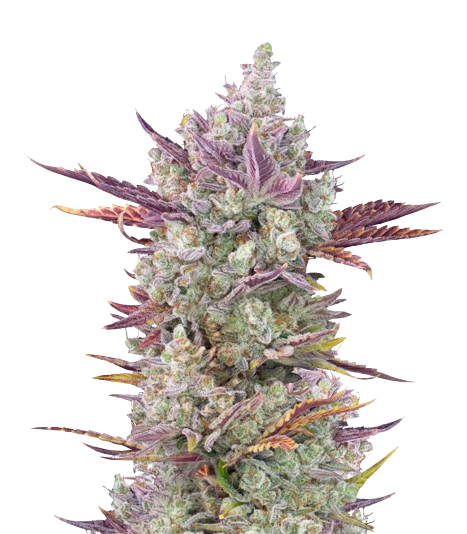
Le discours marketing autour de Cannabis Analysis Gorilla Cookies tourne surtout autour de la puissance et de l'aspect visuel. Ce qui rend vraiment ce cultivar intéressant, c'est sa façon de pousser : la ramification, la tolérance à la fertilisation, la densité des fleurs, et la question de savoir si le produit fini tient la promesse de la génétique. C'est l'objet de cette fiche.
Cannabis Analysis Gorilla Cookies — Fiche express
| Type | Indica lourde |
| Taux de THC | 15-19 % (variable selon le phénotype et les conditions de culture) |
| Temps de floraison | 8-9 semaines après le passage en 12/12 |
| Hauteur | modérée (90-120 cm avec étêtage) |
| Rendement intérieur | 425-525 g/m² (installation correcte, LED de 200 W et plus) |
| Difficulté | Accessible aux débutants |
| Terpène dominant | Terpinolène (secondaire : humulène) |
| Idéale pour | Usage du soir, détente, accompagnement de la douleur |
| Climat | Intérieur de préférence, extérieur sous climat sec |
Génétique et structure de la plante
Cannabis Analysis Gorilla Cookies s'exprime comme indica lourde. La structure de croissance vous en dit long sur ce qui vous attend, avant même le passage en floraison : un espacement internodal serré et de larges feuilles nourricières, qui forment naturellement une canopée touffue. Sans palissage, la plante occupe son espace latéralement plutôt que de s'étirer en hauteur, ce qui convient aux tentes basses de plafond et aux caves.
L'arrière-plan génétique influence bien plus que la structure : il conditionne les besoins nutritifs, la tolérance au stress, la vitesse de floraison et le potentiel terpénique. Comprendre la lignée aide à prédire le comportement de la plante dans votre environnement — ce qui est plus utile que n'importe quelle description commerciale.
Le nez de cette variété — et comment en tirer le meilleur
Le terpène principal de la plupart des phénotypes de Cannabis Analysis Gorilla Cookies est le terpinolène, avec le humulène en contributeur secondaire. Cette combinaison produit une complexité herbacée, avec un côté aromatique presque cédré. Les variétés dominées par le terpinolène sont rares, ce qui rend la saveur singulière : les consommateurs qui trouvent la plupart des cannabis monotones s'y retrouvent souvent.
L'affinage compte énormément avec Cannabis Analysis Gorilla Cookies. Une semaine en bocal donne une version plate et unidimensionnelle du profil terpénique. Trois à quatre semaines en bocaux de verre à 60-62 % d'humidité transforment la complexité aromatique : les terpènes secondaires apparaissent, l'âpreté diminue, et la profondeur dont la génétique est capable se manifeste enfin. Écourter l'affinage est, avec cette variété en particulier, la raison la plus fréquente d'une déception sur le produit fini. Les terpènes façonnent la saveur et modulent le ressenti des cannabinoïdes — ils ne se résument pas à une odeur. Notre guide des terpènes passe en revue les principaux composés et ce qu'ils changent en pratique.
Ce qui se passe du passage en floraison à la récolte
En intérieur, la hauteur se stabilise autour de modérée (90-120 cm avec étêtage) après l'étirement, pour un passage en floraison au moment habituel. La difficulté est accessible aux débutants. La floraison dure environ 8-9 semaines à partir du passage en 12/12 pour les versions photopériodiques.
La phase d'étirement après le passage en 12/12 dure plus longtemps que ne le laissent entendre les fiches de sélectionneurs. Sous LED, comptez 30 à 40 % de hauteur en plus ; sous HPS, plutôt 50 %. Dans une tente de 1,5 m, basculez quand les plantes atteignent 45 à 55 cm — et non les 60 cm qui conviennent aux variétés plus compactes. Le supercropping des branches les plus hautes reste une solution de secours valable si la hauteur vous échappe.
Le rendement intérieur d'une culture correctement menée se situe autour de 425-525 g/m² — cela suppose une LED de 200 W et plus pour 90 x 90 cm, une nutrition adaptée et un environnement raisonnablement stable. Pour une première culture de cette variété, visez le bas de la fourchette ; avec un environnement maîtrisé et deux cultures d'expérience, le haut est atteignable. En extérieur, le rendement dépend de la longueur de saison, du volume de pot et des heures de soleil direct — les climats à longue saison montent nettement plus haut. La gestion de la canopée par étêtage, LST ou SCROG façonne la répartition du rendement et la pénétration de la lumière. Notre guide de taille et de palissage explique quand et comment appliquer chaque technique.
L'expérience : apparition, caractère et durée
À 15-19 % de THC, Cannabis Analysis Gorilla Cookies délivre un effet qui monte progressivement sur 10 à 15 minutes plutôt que d'arriver d'un coup. La génétique indica lourde se lit dans le caractère : une chaleur physique part du buste et se diffuse, accompagnée d'un relâchement musculaire net. L'effet cérébral est présent mais secondaire — vous restez lucide et sociable, mais c'est le corps qui mène. À dose plus élevée, le « couch lock » devient une possibilité réelle, surtout sur les phénotypes les plus chargés en myrcène.
Où cette variété pousse le mieux en France
En intérieur, Cannabis Analysis Gorilla Cookies se mène avec un équipement standard, quel que soit le climat. La plante donne son meilleur entre 22 et 27 °C lumières allumées, et entre 17 et 21 °C lumières éteintes — des plages courantes qui ne demandent aucune climatisation particulière. L'humidité relative doit descendre progressivement de 55-60 % en croissance à 45-50 % en fin de floraison.
En extérieur, tout dépend de la longueur de saison. Une floraison de 8-9 semaines impose des conditions sans gel au moins jusqu'à la mi-octobre pour les versions photopériodiques. Le pourtour méditerranéen, la vallée du Rhône, le Sud-Ouest et la façade atlantique disposent d'une saison suffisante. Dans le nord et l'est de la France, ainsi qu'en altitude, mieux vaut cultiver en intérieur ou choisir une version autofloraison. variétés pour l'extérieur regroupe des génétiques retenues pour leur comportement sous des climats précis.
Cannabis Analysis Gorilla Cookies : faut-il la cultiver, oui ou non
Cette variété convient aux cultivateurs qui ont au moins une récolte réussie derrière eux et veulent monter en qualité sans augmenter fortement la difficulté. La fertilisation est modérée, la réponse au palissage est bonne, et la récompense terpénique à la récolte justifie l'attention supplémentaire par rapport à une autofloraison totalement indulgente.
Pour les cultivateurs qui mènent déjà des génétiques proches et se demandent si Cannabis Analysis Gorilla Cookies mérite d'entrer en rotation : oui, si vous tenez à un caractère aromatique singulier dans votre récolte. Non, si vous cherchez quelque chose qui pousse et se consomme radicalement différemment de ce que vous avez déjà dans cette catégorie.
Cannabis Analysis Gorilla Cookies : les problèmes de culture à anticiper
Ce qui déroute les cultivateurs intermédiaires : la variation phénotypique. Cannabis Analysis Gorilla Cookies peut s'exprimer différemment d'un plant à l'autre, y compris au sein d'un même paquet — un phénotype peut tendre vers la compacité et des fleurs denses, tandis qu'un autre du même lot s'étire davantage avec une structure plus aérée.
C'est de la génétique normale, pas un défaut des graines. Si vous menez plusieurs plants, vous trouverez peut-être un phénotype à conserver en bouture — mais attendez-vous à de la variation au premier essai et jugez la variété sur plusieurs plants, pas sur un seul.
La place de Cannabis Analysis Gorilla Cookies dans sa catégorie
Les cultivateurs comparent souvent Cannabis Analysis Gorilla Cookies à d'autres indica lourdes de la même plage de THC. Voici ce qui la distingue vraiment. Face aux variétés kush comme OG Kush ou Bubba Kush, Cannabis Analysis Gorilla Cookies produit un effet moins sédatif — davantage un confort corporel qu'un assommoir, ce qui la rend plus polyvalente le soir quand on veut se détendre sans perdre la fin de sa soirée. En culture, Cannabis Analysis Gorilla Cookies développe une couverture de trichomes plus dense sur les calices que des variétés au THC comparable, signe d'une production de résine concentrée plutôt qu'étalée.
Cannabis Analysis Gorilla Cookies : ce qu'il faut retenir
Cannabis Analysis Gorilla Cookies n'est pas la variété la plus médiatisée du marché, et c'est précisément pour cela que les cultivateurs qui la découvrent la gardent en rotation. Elle délivre 15-19 % de THC avec un profil dominé par le terpinolène, sur une plante qui pousse de façon prévisible et termine en 8-9 semaines. Pour qui a cessé de courir après le chiffre de THC le plus élevé et s'intéresse à la qualité globale de ce qui sort du bocal — saveur, caractère de l'effet, fiabilité en culture, régularité — ce cultivar mérite sa place. Vous trouverez Cannabis Analysis Gorilla Cookies et des génétiques proches dans notre catalogue complet, ou parcourez variétés indica pour des options voisines.
Questions fréquentes
- Combien de temps faut-il entre le semis et la récolte de Cannabis Analysis Gorilla Cookies ?
- Versions photopériodiques : 4 à 6 semaines de croissance + 8-9 semaines de floraison, soit 12 à 17 semaines au total. Versions autofloraison (quand elles existent) : 10 à 13 semaines depuis la graine. En intérieur, c'est vous qui fixez la durée de croissance — plus elle est longue, plus la plante est grande et le rendement élevé.
- Cannabis Analysis Gorilla Cookies convient-elle à un petit espace ?
- Oui — sa structure naturellement compacte s'accommode d'une tente de 60 x 120 cm ou de 90 x 90 cm sans palissage poussé.
- Quel substrat convient le mieux à Cannabis Analysis Gorilla Cookies ?
- Cette variété se comporte bien en terre, en coco et en hydroponie. La terre est la plus indulgente pour un cultivateur peu expérimenté. La coco donne une croissance plus rapide et plus de contrôle. L'hydroponie maximise le potentiel de rendement mais demande un suivi quotidien.
- Cannabis Analysis Gorilla Cookies sent-elle fort pendant la floraison ?
- Le profil dominé par le terpinolène produit un arôme assez marqué entre les semaines 4 et 8 de floraison. Un bon filtre à charbon est recommandé en intérieur dès que la discrétion compte.
- Qu'est-ce qui distingue Cannabis Analysis Gorilla Cookies des variétés proches ?
- La combinaison terpinolène/humulène produit une saveur et un profil d'effets distincts des autres cultivars de la même plage de THC. Le comportement en culture — compacte, fleurs denses, appétit modéré — la différencie également de génétiques qui paraissent semblables sur le papier.
Articles Connexes
Prêt à Commencer la Culture ?
Parcourez plus de 1 200 graines de cannabis premium avec livraison discrète en France et notre garantie de germination à 95%.
Acheter des Graines de Cannabis